

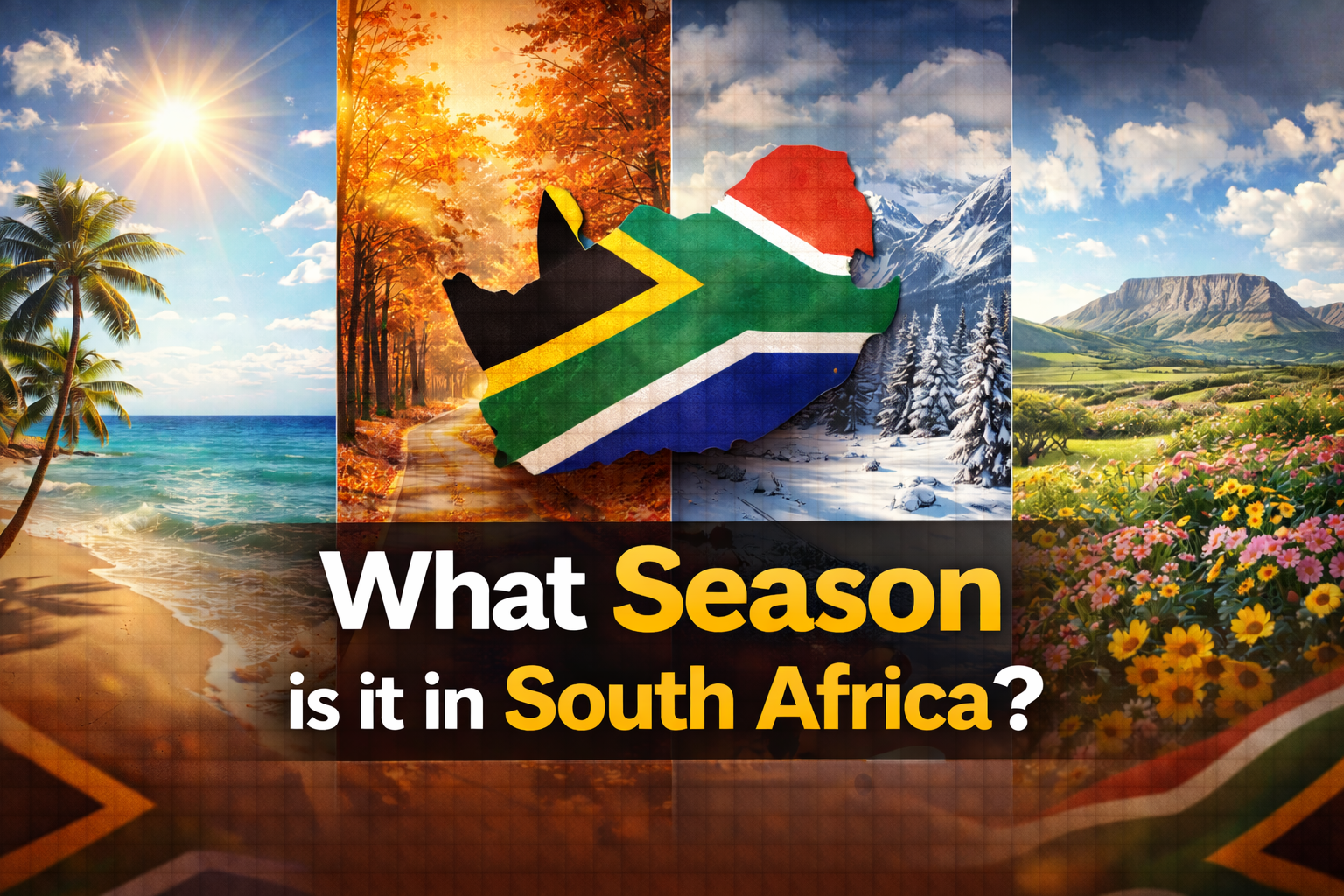
You might wonder what season is it in South Africa when planning travel, studying climate patterns, or comparing global seasons with your own location. South Africa sits in the Southern Hemisphere, which means its seasons run opposite to those in Europe and North America.
This guide explains the current season in South Africa, how seasons change throughout the year, and what weather you can realistically expect wherever you are heading.
Understanding Seasons in South Africa
To understand what season it is in South Africa, you need to first understand how hemispheres affect seasonal cycles. Because South Africa lies south of the equator, summer and winter occur at opposite times compared to the Northern Hemisphere, a reversal that often surprises first-time visitors and is closely linked to broader climate dynamics such as the causes of climate change in South Africa. When you experience winter in Europe or North America, South Africa is usually enjoying summer weather.
South Africa officially recognizes four seasons, each lasting roughly three months throughout the year. These seasons influence temperature, rainfall, wildlife behavior, and daily life across the country. Knowing this structure helps you interpret weather forecasts and seasonal travel advice accurately.
Seasons in South Africa are shaped by latitude, ocean currents, and elevation rather than extreme seasonal shifts. You will notice more subtle transitions compared to countries with harsh winters or scorching summers. This balance makes South Africa a year round destination for many activities.
What Season Is It in South Africa Right Now
What season it is in South Africa right now depends entirely on the current month of the year. Seasons change predictably and follow a consistent calendar that rarely shifts. Understanding this timing helps you align expectations with real weather conditions.
If it is December, January, or February, South Africa is in summer. If it is March, April, or May, the country experiences autumn conditions. From June through August, winter dominates, while September through November marks spring across most regions.
This seasonal rhythm applies nationally, but local conditions can vary depending on altitude and proximity to the ocean. Coastal regions feel seasonal changes more gently, while inland areas experience stronger temperature swings. Knowing the month gives you the clearest answer to what season it is in South Africa.
Summer Season in South Africa
Summer in South Africa runs from December to February and represents the warmest time of the year. During this season, you can expect long daylight hours and generally hot temperatures across most regions. Summer is also the peak travel season due to holidays and school breaks.
Rainfall during summer is common in many parts of the country, especially inland. Thunderstorms often occur in the afternoon and evening rather than lasting all day, a pattern that contrasts with regions such as the Western Cape where winter rainfall dominates and shapes what type of climate Cape Town has. These rain showers help cool the air and support lush landscapes.
Coastal areas remain popular in summer due to warm ocean temperatures and refreshing sea breezes. Inland cities like Johannesburg can experience intense heat during the day followed by cooler nights. Summer is ideal for beach holidays, festivals, and outdoor dining.
Autumn Season in South Africa
Autumn in South Africa spans from March to May and is often considered one of the most pleasant seasons. Temperatures gradually cool, and humidity drops significantly after summer rains. This creates comfortable conditions for travel and sightseeing.
Rainfall decreases across most regions during autumn, leading to clearer skies and stable weather. Landscapes remain green from the previous rainy months, especially in the interior. Wildlife viewing begins to improve as water sources become more limited.
Autumn offers a balance between warmth and comfort without extreme heat. Crowds start to thin compared to summer, which can enhance your travel experience. This season suits city exploration, wine tours, and long scenic drives.
Winter Season in South Africa
Winter in South Africa occurs from June to August and brings cooler, drier conditions. Daytime temperatures are usually mild, while nights can become quite cold, especially inland. Snow is rare but possible in mountainous regions.
Most parts of the country receive little to no rainfall during winter. Clear skies and dry air dominate the season, making it ideal for outdoor activities and wildlife safaris, particularly in conservation areas where seasonal changes influence biodiversity such as regions discussed in are white rhinos extinct. Wildlife viewing is at its best as animals gather around limited water sources.
Coastal areas experience milder winters compared to inland regions. Cities near the ocean remain relatively warm during the day. Winter is perfect for safaris, hiking, and cultural experiences without extreme weather.
Spring Season in South Africa
Spring in South Africa runs from September to November and marks a transition from cool to warm conditions. Temperatures begin to rise steadily, and days become longer. Natural landscapes start to bloom after winter dormancy.
Rainfall slowly returns to summer rainfall regions toward the end of spring. This leads to fresh vegetation and vibrant scenery. Wildlife becomes more active as food sources increase.
Spring is an excellent season for photography, outdoor exploration, and wildlife viewing. The weather remains comfortable without intense heat or heavy rain. It is also a quieter travel period before summer crowds return.
Regional Climate Differences Across South Africa
South Africa’s seasons are influenced by regional geography, which creates varied climate patterns. Coastal areas experience more stable temperatures throughout the year. Inland regions see greater contrasts between summer heat and winter cold.
The Western Cape follows a Mediterranean climate with wet winters and dry summers. This differs from most of the country, which receives rain primarily in summer. Understanding this difference is essential when interpreting seasonal weather.
High altitude areas like the interior plateau experience colder winter nights. Low lying coastal regions remain warmer year round. These variations mean the season feels different depending on where you are in South Africa.
Rainfall Patterns and Seasonal Weather
Rainfall plays a major role in defining South Africa’s seasons. Most regions receive rain during the summer months, often in the form of short but intense thunderstorms. These rains support agriculture and natural ecosystems.
The Western Cape stands apart by receiving rainfall mainly during winter. This unique pattern shapes farming, tourism, and daily life in the region. It also explains why winter can feel wetter in Cape Town than in other cities.
Seasonal rainfall affects travel planning and outdoor activities. Summer rain rarely disrupts full days, while winter rain in the Western Cape can last longer. Understanding rainfall helps you prepare realistically for each season.
Best Time to Visit Based on the Season
Choosing the best time to visit South Africa depends on what you want to experience. If wildlife viewing is your priority, winter offers the best conditions. If beaches and festivals appeal to you, summer delivers vibrant energy.
Spring and autumn provide balanced weather and fewer crowds. These shoulder seasons suit travelers seeking comfort and flexibility. Prices may also be more favorable during these periods.
No single season is perfect for everyone. Each season offers distinct advantages depending on your goals. Understanding what season it is in South Africa helps you make informed decisions.
How to Know the Current Season in South Africa
To know the current season in South Africa, you only need to check the month. Seasons follow a fixed calendar that does not change year to year. This consistency makes planning straightforward.
Weather forecasts can refine your expectations within each season. Local conditions such as altitude and proximity to the ocean influence daily temperatures. However, the seasonal framework remains reliable.
By combining the month with regional awareness, you gain a clear understanding of current conditions. This knowledge helps you pack appropriately and plan activities confidently. Knowing the season removes uncertainty from your plans.
Conclusion
Understanding what season it is in South Africa helps you align expectations with reality when planning travel or studying climate patterns. Because South Africa follows Southern Hemisphere seasons, its weather often contrasts sharply with Northern Hemisphere countries. By recognizing seasonal timing, regional differences, and rainfall patterns, you can plan confidently and enjoy South Africa at its best.
