

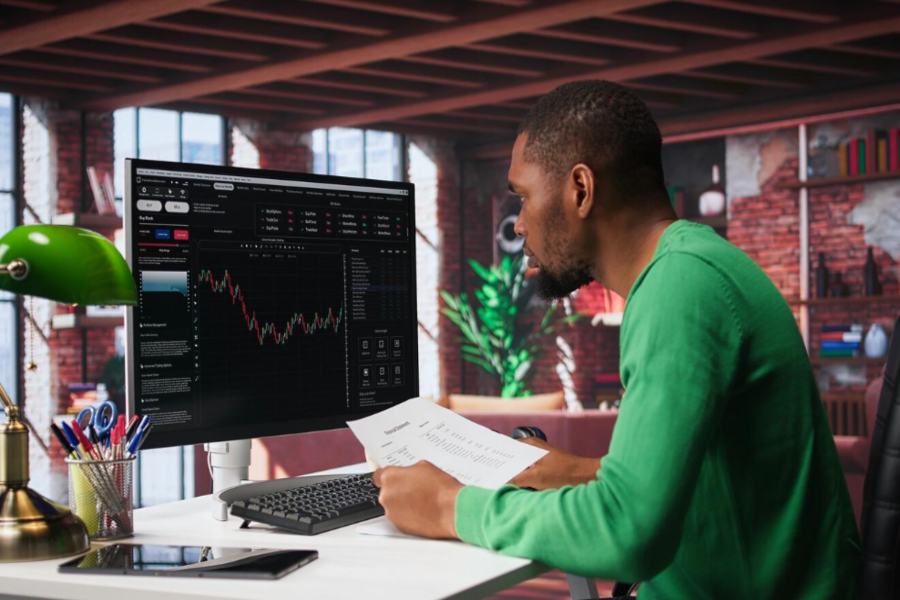
Forex trading has matured quickly in recent years, and for experienced traders who want to sharpen their edge, the South African market offers a unique blend of opportunity, regulation and volatility that needs to be understood properly.
Forex trading isn’t the unruly mess it used to be. For seasoned traders, the game’s become structured and tech-heavy, where speed, execution quality and regulation are just as important as strategy.
And once you start looking at emerging markets like South Africa, things get even more interesting. Liquidity is high, retail traders are piling in and access to global markets has never been easier. But it’s not straightforward.
If you’ve been trading for a while, you already know the challenge isn’t figuring out what forex is. It’s about understanding how regional quirks, broker differences and changing trading conditions can quietly make or break your long-term results.
The reality of forex trading today
At its core, forex trading means exchanging one currency for another to profit from price swings. Whether you’re trading in London, Dubai or Johannesburg, that basic idea never changes. But the way you connect to the market does.
Now, most trading happens through online platforms offering brokerage across multiple assets. These platforms let you access not just currencies, but also gold, oil, indices and crypto.
For experienced traders, having this multi-asset access is key. It allows for hedging, adjusting to macro trends and diversifying without having to juggle several accounts. But not all brokers deliver equally.
A closer look at modern trading platforms
Many modern brokers pitch themselves as all-in-one trading hubs, not just places to fill orders. Take a typical online platform for forex trading in South Africa, offering brokerage across forex, gold, oil, indices and crypto. These platforms are built for traders who want speed and flexibility without constantly moving between accounts. Some advanced features include:
- Instant withdrawals for fast capital access.
- Swap-free trading options for certain accounts.
- 24/7 customer support for global trading schedules.
- Enhanced encryption and compliance systems.
For experienced traders, these aren’t just nice extras. They impact how efficiently you can use and manage your money. Swap-free trading matters for folks who hold positions long-term or work under specific financial rules. Instant withdrawals cut the hassle when moving capital between strategies.
Why South Africa stands out for experienced traders
South Africa’s trading scene has grown a lot over the last ten years. Better internet, more financial knowledge and easier access to global markets have all combined to create a busier trading environment. But what really makes South Africa stand out is regulation.
The Financial Sector Conduct Authority (FSCA) takes the lead in overseeing financial services. For experienced traders, this means at least some level of accountability when picking a broker operating locally or targeting traders in the region.
What experienced traders should really compare
Most newbies get distracted by bonuses or flashy dashboards. Experienced traders know that the real advantage comes from understanding the fine print that actually affects performance.
Trading costs and hidden spreads
Spreads, commissions and overnight fees can quietly eat away at your profits. On high-frequency or scalping strategies, even tiny differences count. Plenty of brokers claim “low spreads”, but those spreads often widen during volatile sessions.
Execution speed and order quality
If timing is everything, execution is king. Slippage, requotes and delayed order processing can ruin even the best strategy. Experienced traders test brokers during wild, volatile periods rather than when the market is calm.
Platform functionality and flexibility
Most serious traders use advanced platforms like MetaTrader 4 or MetaTrader 5, plus custom web or mobile platforms. The real question isn’t “does it work?” but “can it scale with your strategy?” Key features experienced traders care about:
- Advanced charting tools and indicators.
- Depth of market visibility.
- Custom scripting or algorithm support.
- Quick switching between asset classes.
If a platform slows down when you switch between forex pairs and commodities, that’s a warning sign.
Asset variety and market access
These days, a trading account isn’t only about currencies. Being able to trade gold, oil, indices and crypto lets traders build broader strategies that respond to global economic shifts, not just currency moves.
For example, USD strength might line up with gold weakness or oil volatility, depending on global conditions.
The role of broker reliability and trust
For seasoned traders, trust matters more than marketing. And with good reason. A trustworthy broker isn’t just about keeping the platform online. It’s about:
- Transparent pricing.
- Segregated client funds.
- Strong security protocols.
- Regulatory compliance.
Practically, this means fewer surprises with withdrawals or big trades. Some platforms even offer instant withdrawals, which is now almost expected by active traders. Waiting days for your money feels outdated.
Market behaviour and local considerations
Trading conditions in South Africa are shaped by global and local factors. The rand is especially sensitive to global risk trends, commodity prices and domestic politics. This creates both chances and sharp volatility spikes that can surprise even seasoned traders.
For serious forex traders, this means adjusting risk models to handle sudden moves, not just relying on technical setups.
Risk management still wins the game
Even experienced traders get overconfident sometimes. The truth is, forex is still a leveraged market. Small price movements can swing profits or losses much more than you’d expect. That’s why risk management always matters:
- Position sizing based on volatility, not gut feeling.
- Stop losses that fit the market structure.
- Avoiding too much exposure to correlated assets.
- Regularly reviewing drawdowns and strategy performance.
No matter how advanced you get, ignoring risk is usually how you lose.
A competitive and structured game
Forex trading is now a competitive and structured game, especially for experienced traders trying to refine their skills. In South Africa, the opportunities are real, but so are the challenges. Broker quality, execution speed, platform reliability and regulation play a bigger role than most new traders realise.
It’s not just about finding the right strategy. It’s about picking the right setup to support it. Platforms that offer multi-asset access, quick withdrawals, swap-free trading and strong compliance really stand out.
